
Projects
Our Funders

Root-Derived Carbon in Natural and Restored Coastal Systems
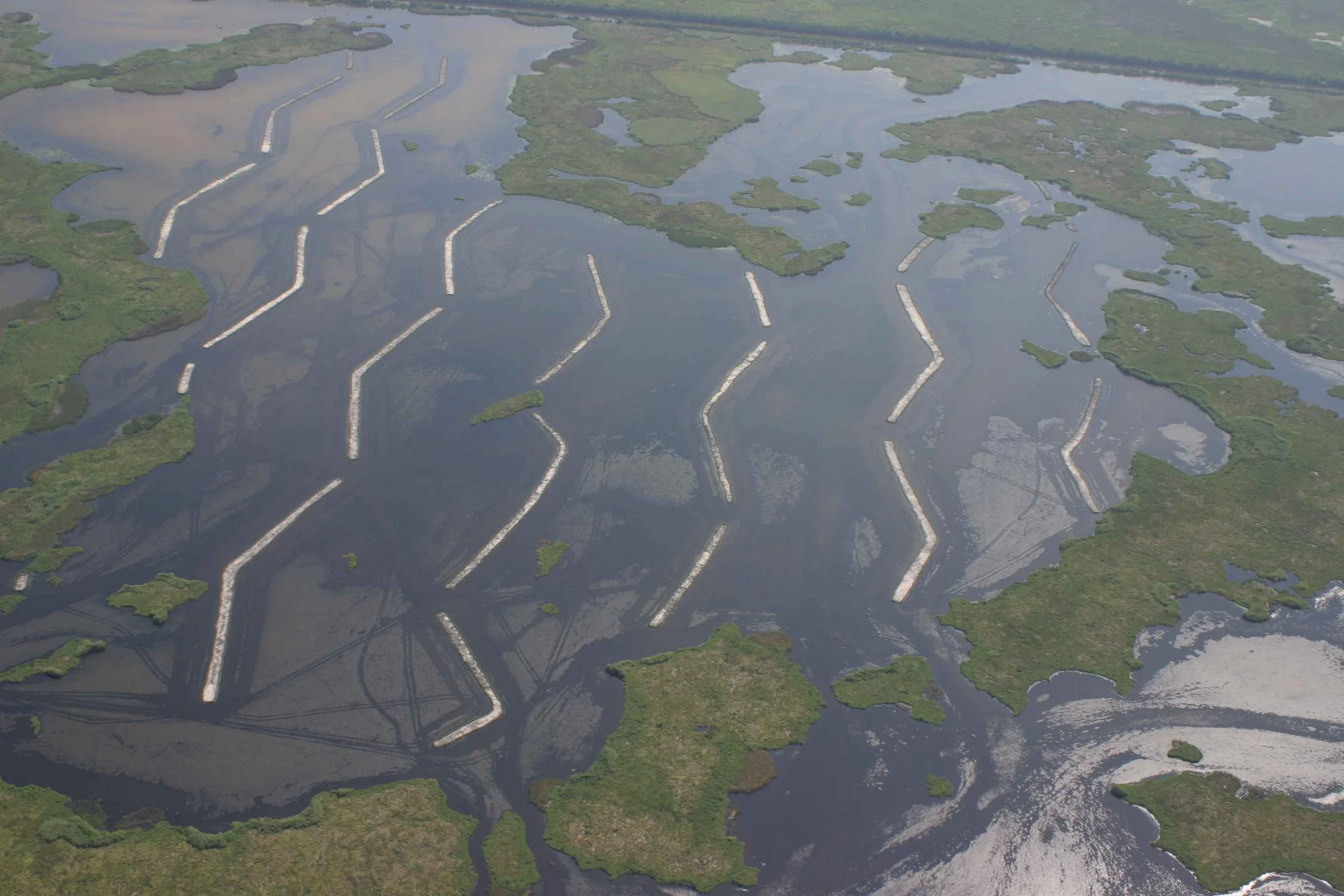
Marsh restoration using dredged sediment creates soils with a very different starting point from those of natural marshes, and it remains unclear how quickly and how completely biogeochemical function develops in them. Work at Whiskey Island, Louisiana compares soil physicochemistry and rates of carbon and nitrogen cycling between a dredge-spoil-created marsh and an adjacent natural marsh, and uses incubation experiments to test how root-derived dissolved organic carbon primes the decomposition of existing soil organic matter. This work is supported by the Joe W. and Betty Dorsett Brown Foundation.
Biogeochemical Development of Marsh Terraces
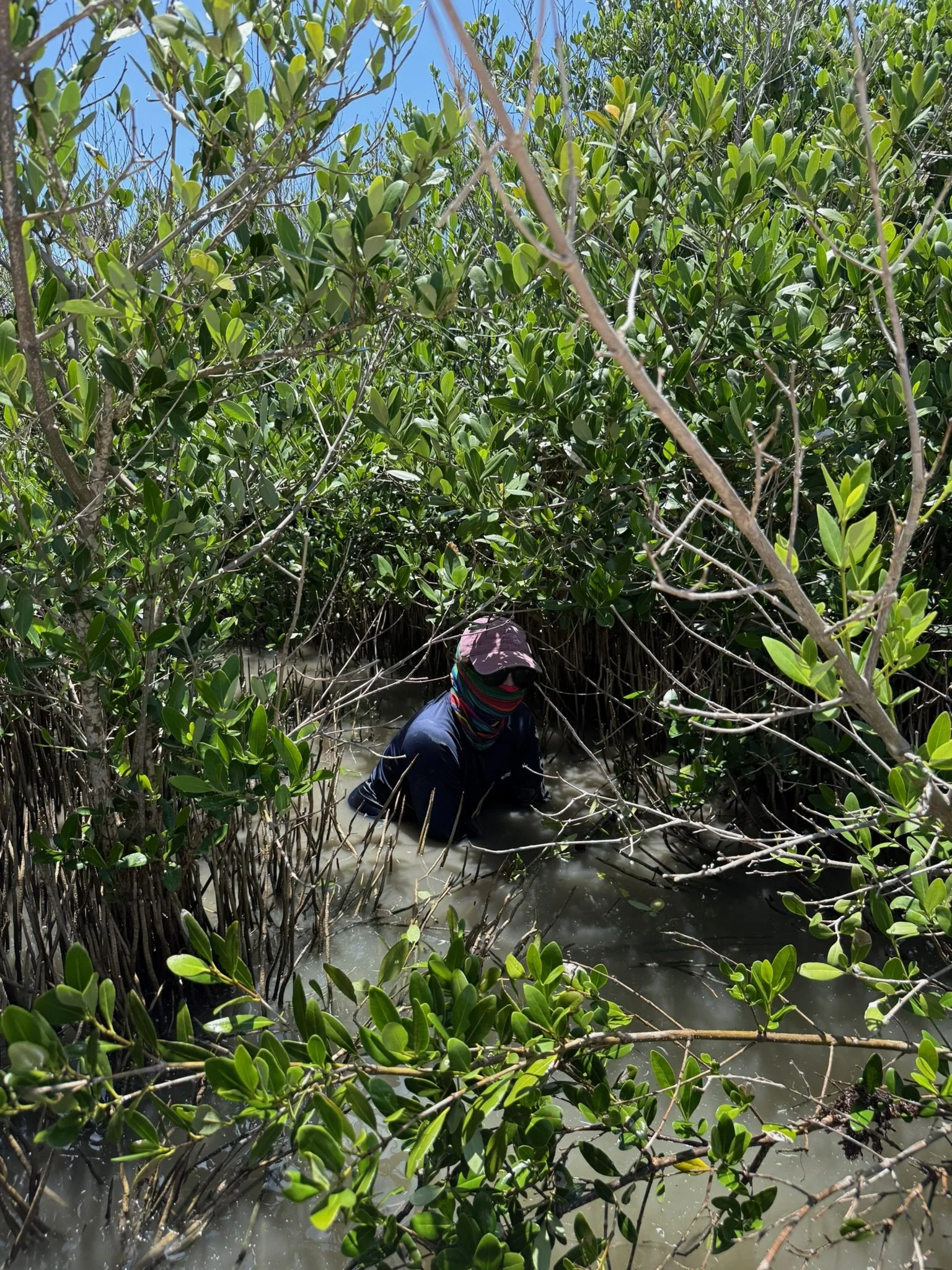
Small-scale genetic variation within a foundation species can cascade into measurable differences in the ecosystem processes that species supports. This project investigates genetic variation in the black mangrove (Avicennia germinans) at Port Fourchon, Louisiana and its consequences for soil formation and biogeochemical cycling, pairing plant genetics and traits with soil organic matter, nutrient availability, and carbon mineralization rates across encroachment sites. The project is led by Dr. Robyn Zerebecki at the University of Louisiana at Lafayette, with the Coastal Biogeochemistry Lab leading the soils and biogeochemistry component, and is funded through the Partnership for a Working Coast.
Carbon Respiration on the Louisiana Continental Shelf
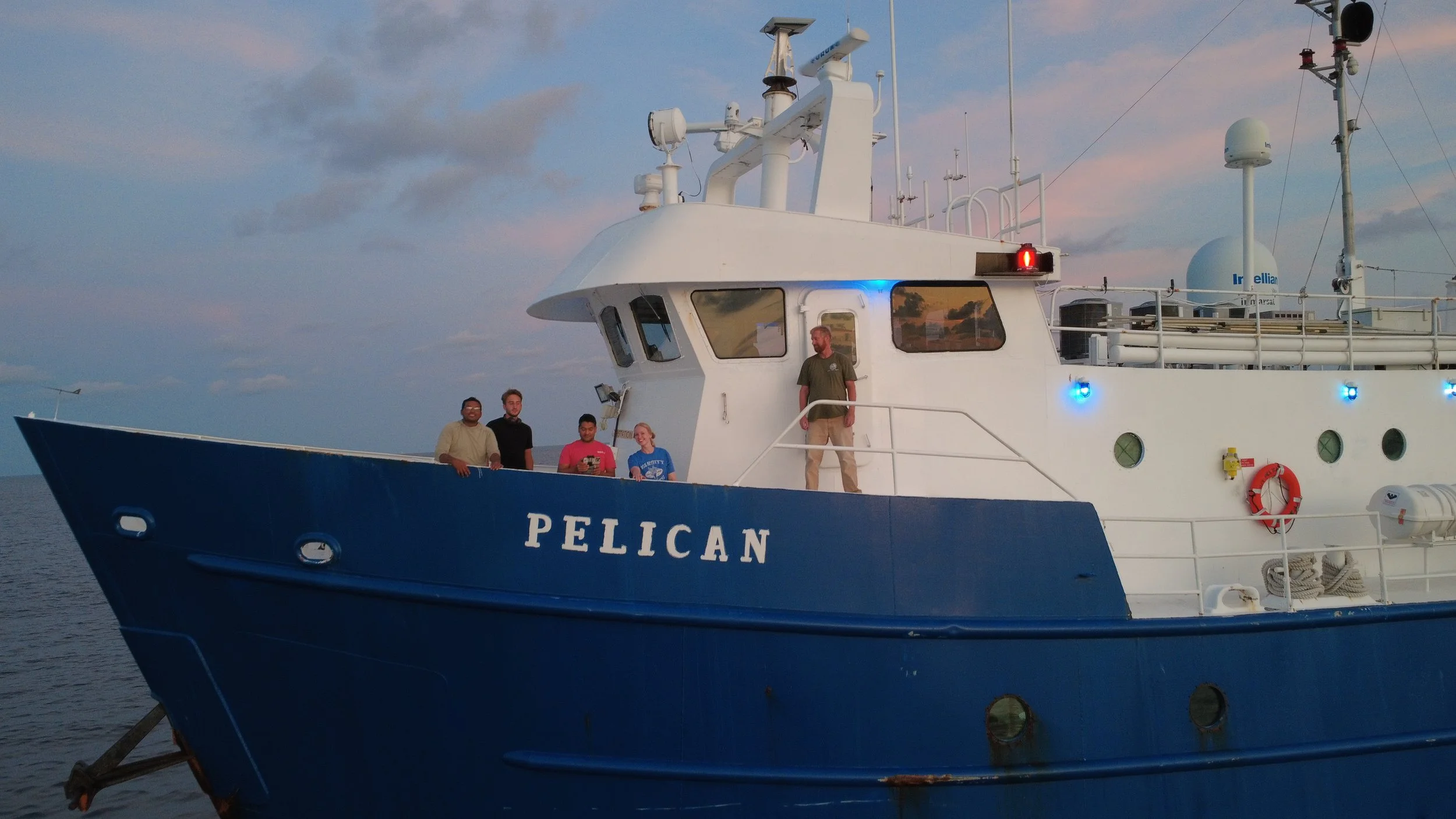
Organic carbon exported from coastal wetlands and the Mississippi River is either respired in shelf sediments or buried, and the balance between those fates shapes both the regional carbon budget and bottom water oxygen conditions. Work on the Louisiana continental shelf measures rates of anaerobic carbon mineralization in shelf sediments across depth and distance from shore, in order to understand where deposited organic matter is remineralized and what controls how much of it persists.
Poleward Expansion of Mangroves into Tidal Marshes
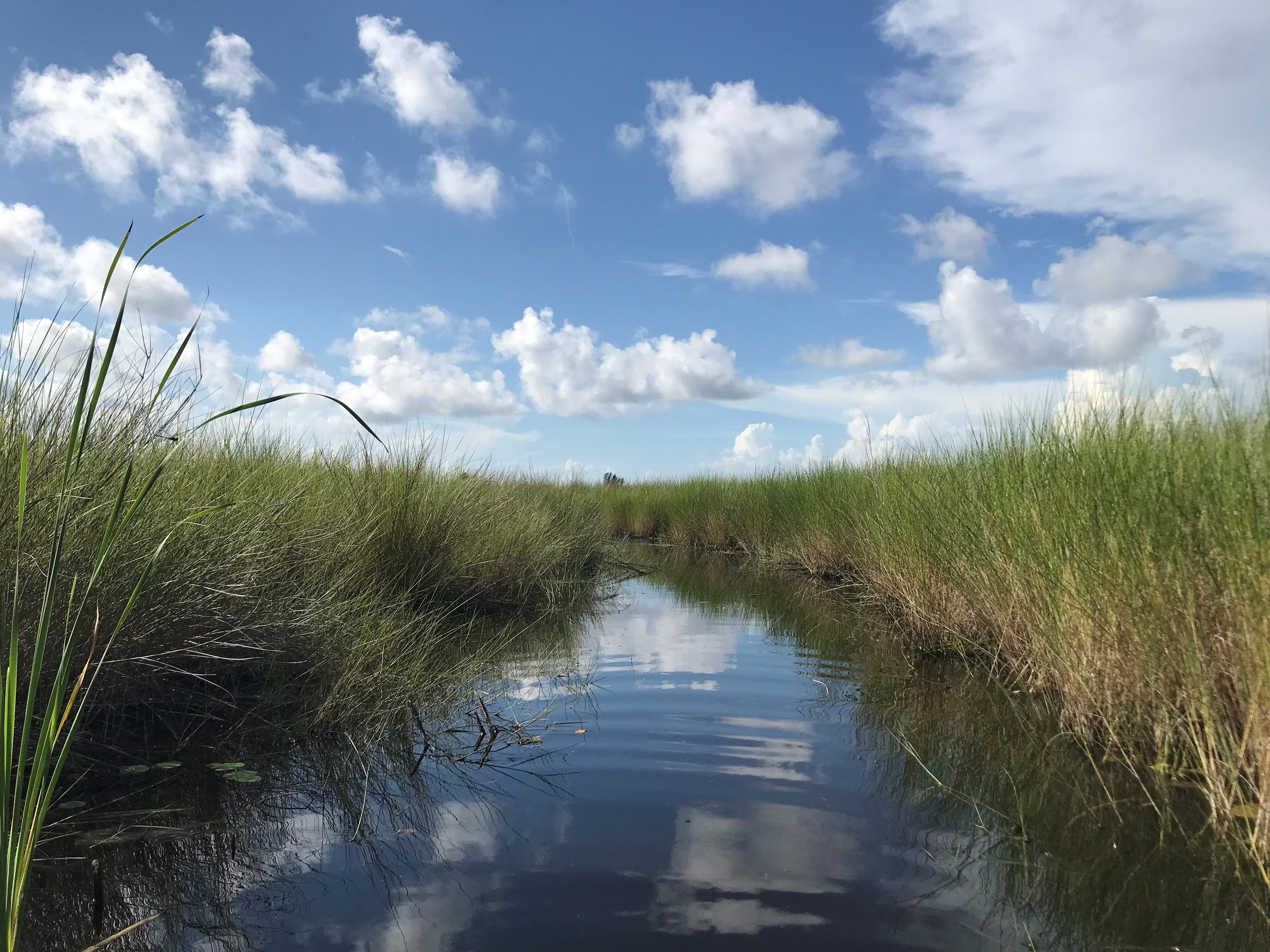
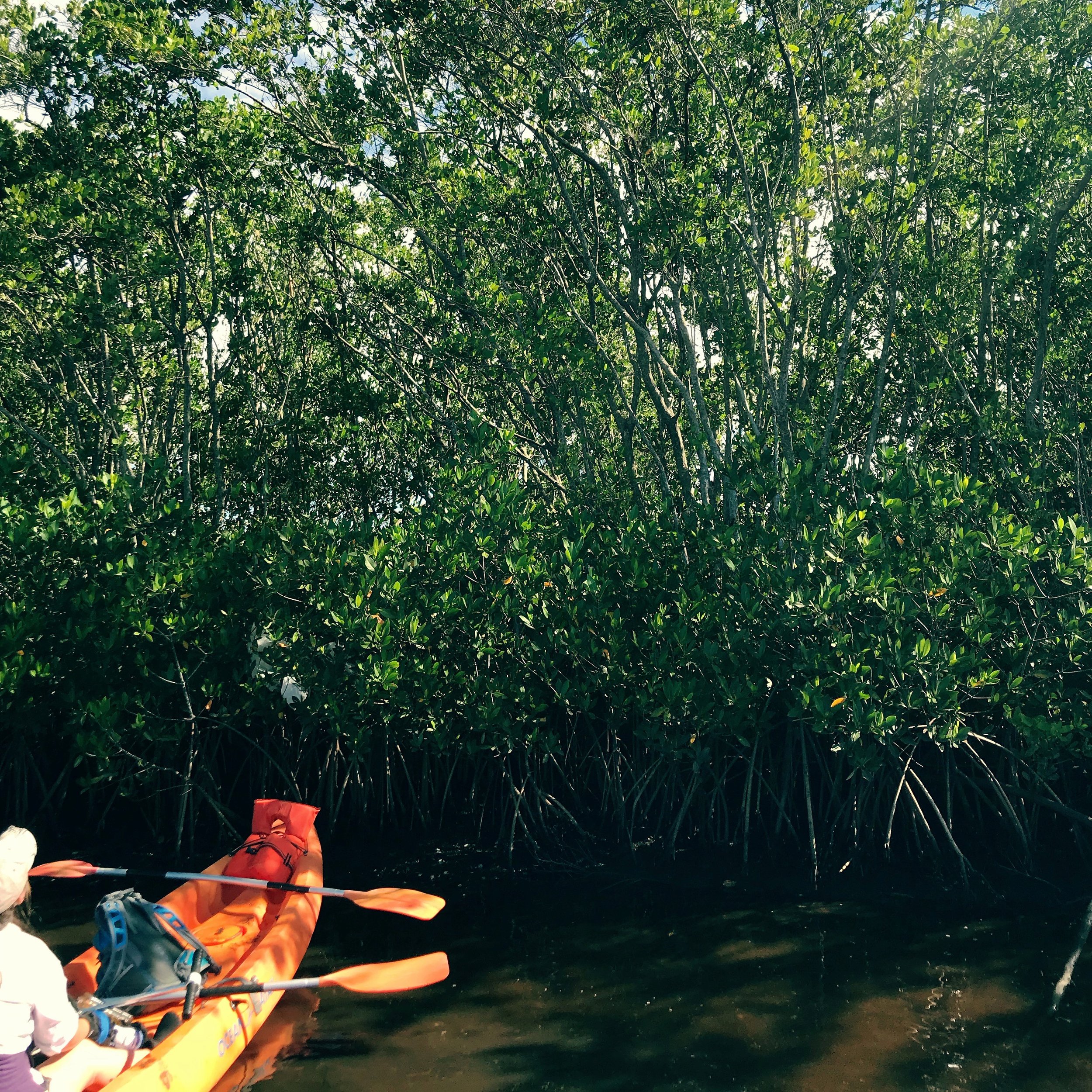
Globally, the poleward expansion of mangroves is occurring at the expense of tidal marshes, with implications for changes to ecosystem services. Read more about Dr. Steinmuller’s work on mangrove encroachment into tidal marshes: https://link.springer.com/article/10.1007/s10021-019-00411-8 and https://www.frontiersin.org/articles/10.3389/ffgc.2022.852910/full.
Genetic Variation in Black Mangroves and Wetland Ecosystem Function
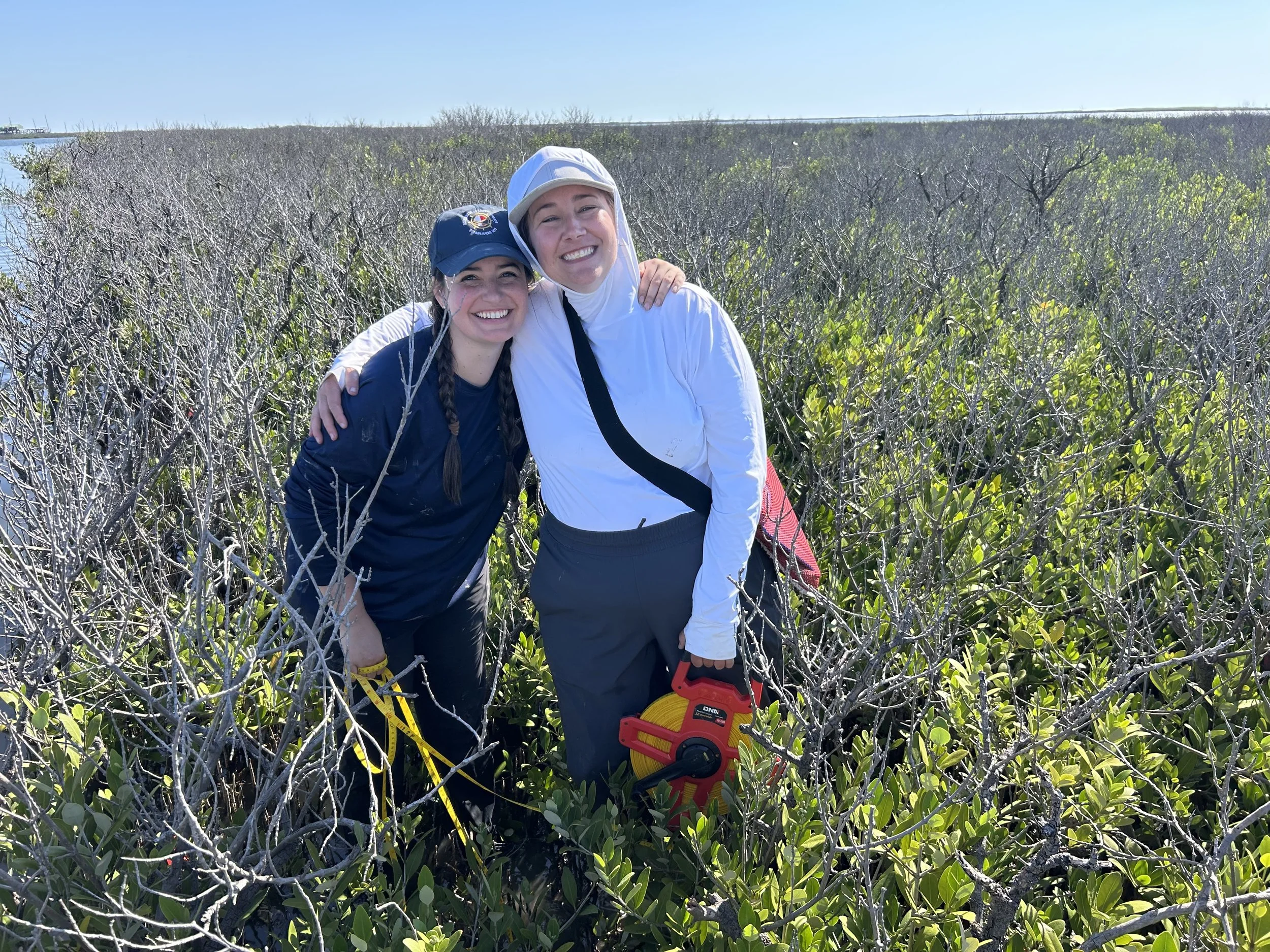
Small-scale genetic variation within a foundation species can cascade into measurable differences in the ecosystem processes that species supports. This project investigates genetic variation in the black mangrove (Avicennia germinans) at Port Fourchon, Louisiana and its consequences for soil formation and biogeochemical cycling, pairing plant genetics and traits with soil organic matter, nutrient availability, and carbon mineralization rates across encroachment sites. The project is led by Dr. Robyn Zerebecki at the University of Louisiana at Lafayette.
Coastal wetlands occupy the interface between aquatic and upland systems and perform critical ecosystem services that include habitat provision and fisheries support, as well as carbon storage and water quality regulation, which are mediated by biogeochemical processes. Global climate change is impacting relative sea level rates worldwide, which alters the areal extent of these wetlands. In response to sea-level rise, coastal wetlands can either a) accrete vertically to maintain their position in the tidal frame, b) transgress landward, or c) submerge entirely, each of which has important ramifications for the storage and cycling of carbon and nutrients.
Defining ‘Blue Nitrogen’
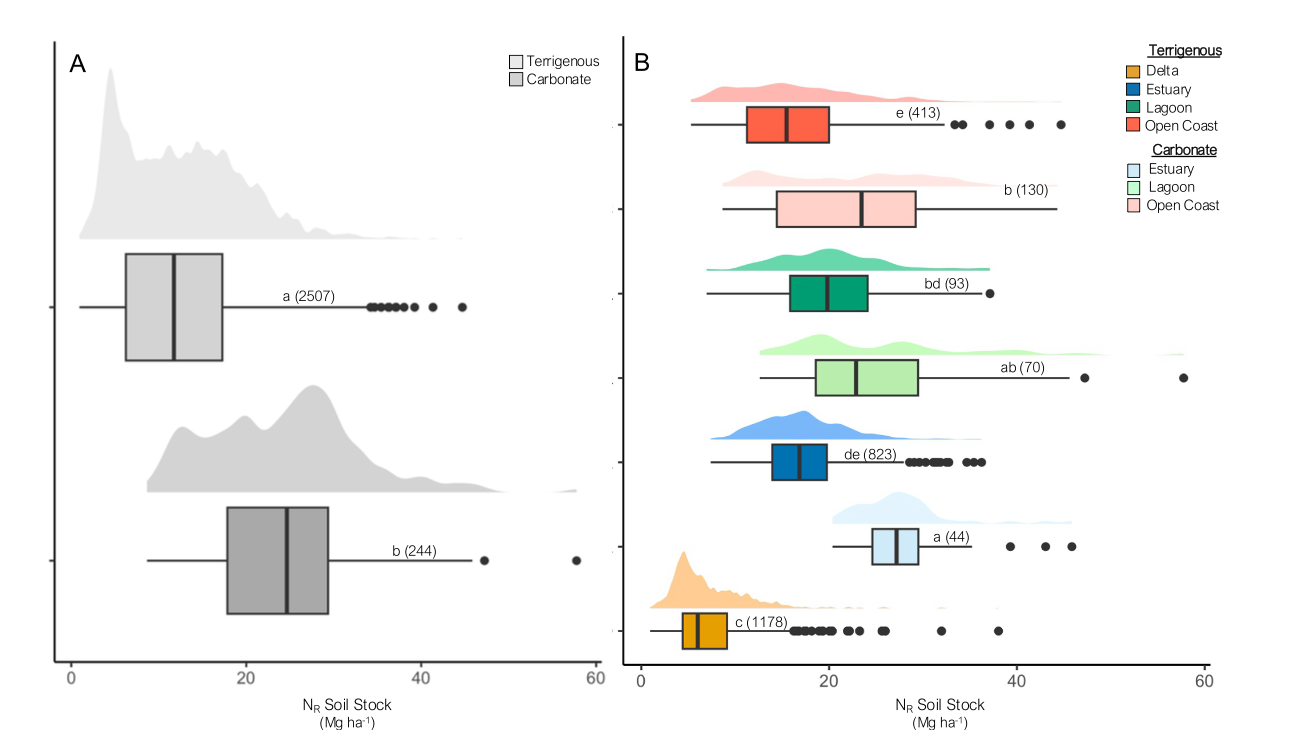
The blue carbon framework has reshaped how coastal wetlands are valued and managed, but no equivalent consensus exists for nitrogen, despite the central role coastal wetlands play in nitrogen removal, storage, and transformation. Current work synthesizes how "blue nitrogen" has been used across the literature and proposes an explicit definition, along with an assessment of where the blue carbon model does and does not translate to nitrogen. Check out a recent publication here: https://agupubs.onlinelibrary.wiley.com/doi/abs/10.1029/2025GB008959.

Refining Rates of Carbon Burial in Global Mangrove Ecosystems

The Biogeochemical Responses of Coastal Wetlands to Sea-Level Rise
Carbon Quality in Blue Carbon Storage
Mangroves bury carbon at different rates in coastal settings characterized by different sediment types and by variations in how riverine and ocean water interact with the landscape. Read more here: https://agupubs.onlinelibrary.wiley.com/doi/10.1029/2022GL100177.
Understanding the physical and chemical nature of stored organic material is critical to forecasting changes to organic matter stores. Read more here: https://www.sciencedirect.com/science/article/pii/S0048969719319564 and https://www.sciencedirect.com/science/article/abs/pii/S0016706117322553.